How It Works
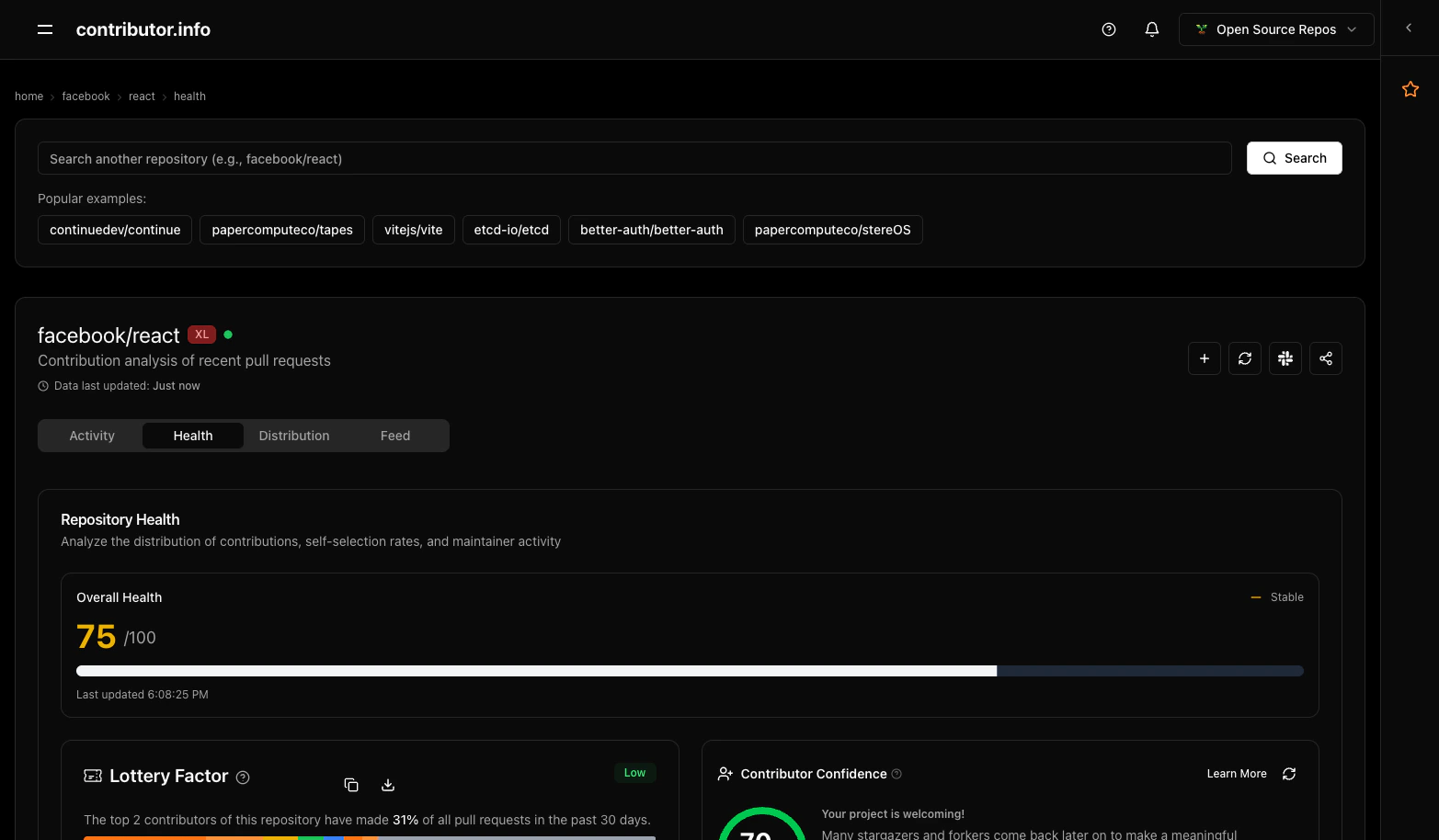
contributor.info analyzes the last 30 days of merged pull requests to calculate what percentage of contributions come from each contributor. The result is a risk score based on how concentrated that work is. Example calculation: A project with 10 contributors where the top 2 contributors authored 85% of merged PRs has a High Risk lottery factor. If those 2 contributors left, the project would lose the majority of its active development capacity.Risk Levels
🟢 Low Risk — Well-distributed contributions. Top 5 contributors account for less than 60% of work. The project can sustain contributor turnover. 🟡 Medium Risk — Moderate concentration. A few contributors are doing most of the work, but the project isn’t fully dependent on any single person. 🔴 High Risk — Heavy reliance on a small number of people. Losing one or two contributors could stall or block the project.Thresholds
YOLO Coders
contributor.info also identifies contributors who commit directly to the main branch without opening pull requests. These direct pushes:- Bypass code review, which can introduce bugs or security issues
- May bypass CI/CD checks configured only for pull requests
- Create gaps in the audit trail
main represents both a lottery factor risk and a process risk.
Actions for High Risk
If your project shows High Risk:- Add beginner-friendly issues — Label
good first issuetickets to invite new contributors and spread knowledge. - Organize knowledge sharing — Pair high-concentration contributors with others through regular syncs or review rotations.
- Start a mentorship program — Actively bring newer contributors up to speed on critical areas.
- Document everything — Architecture decisions, onboarding guides, and runbooks reduce the cost of contributor turnover.